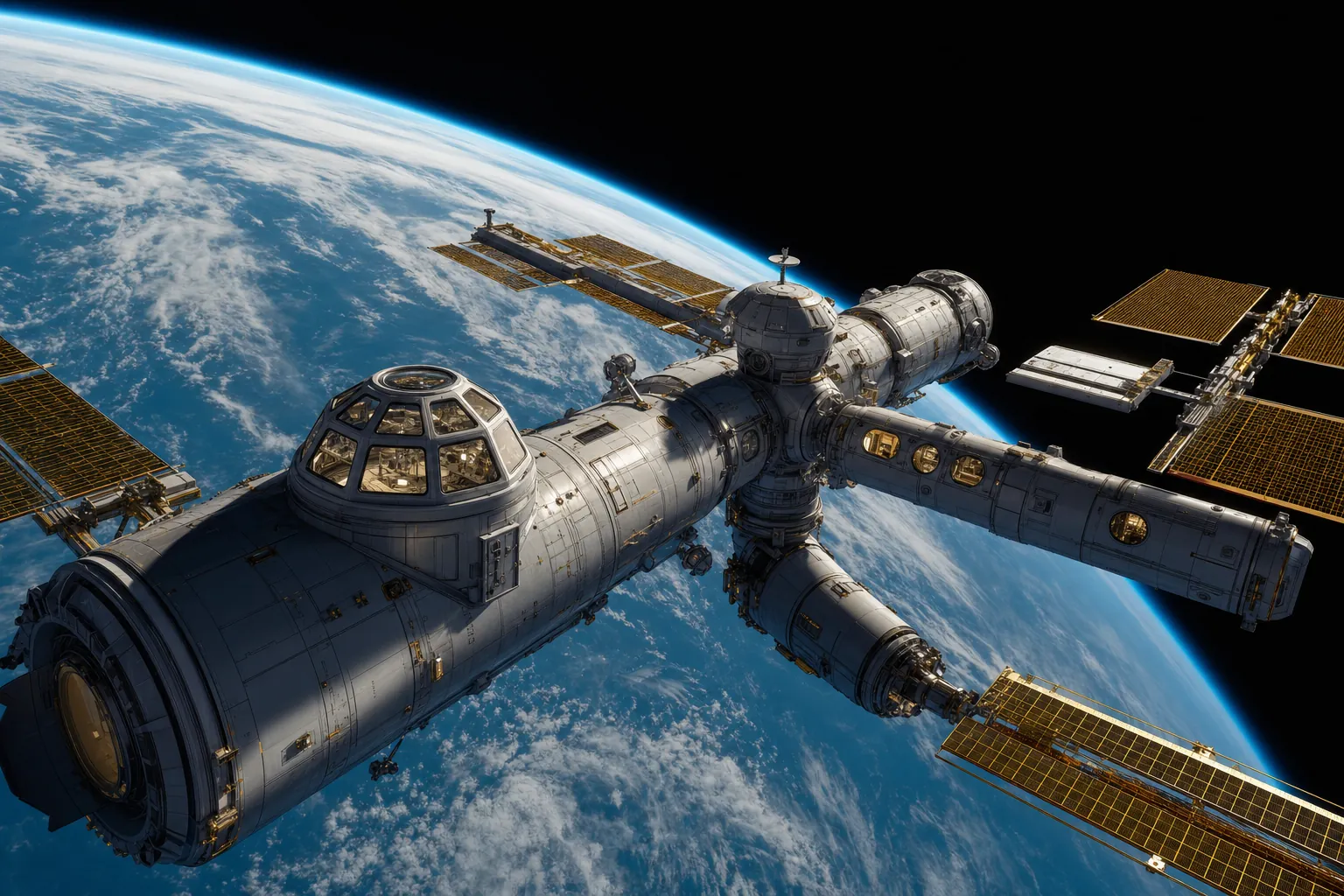
A modular commercial space station in low Earth orbit with cylindrical habitat modules, gold solar arrays and a large observation cupola.

Frontier missions & progress

The programs that decide what orbit costs

Ten sourced dispatches on launch economics, lunar cadence, the end of the ISS and the commercial stations built to replace it — each one traceable to a primary source.

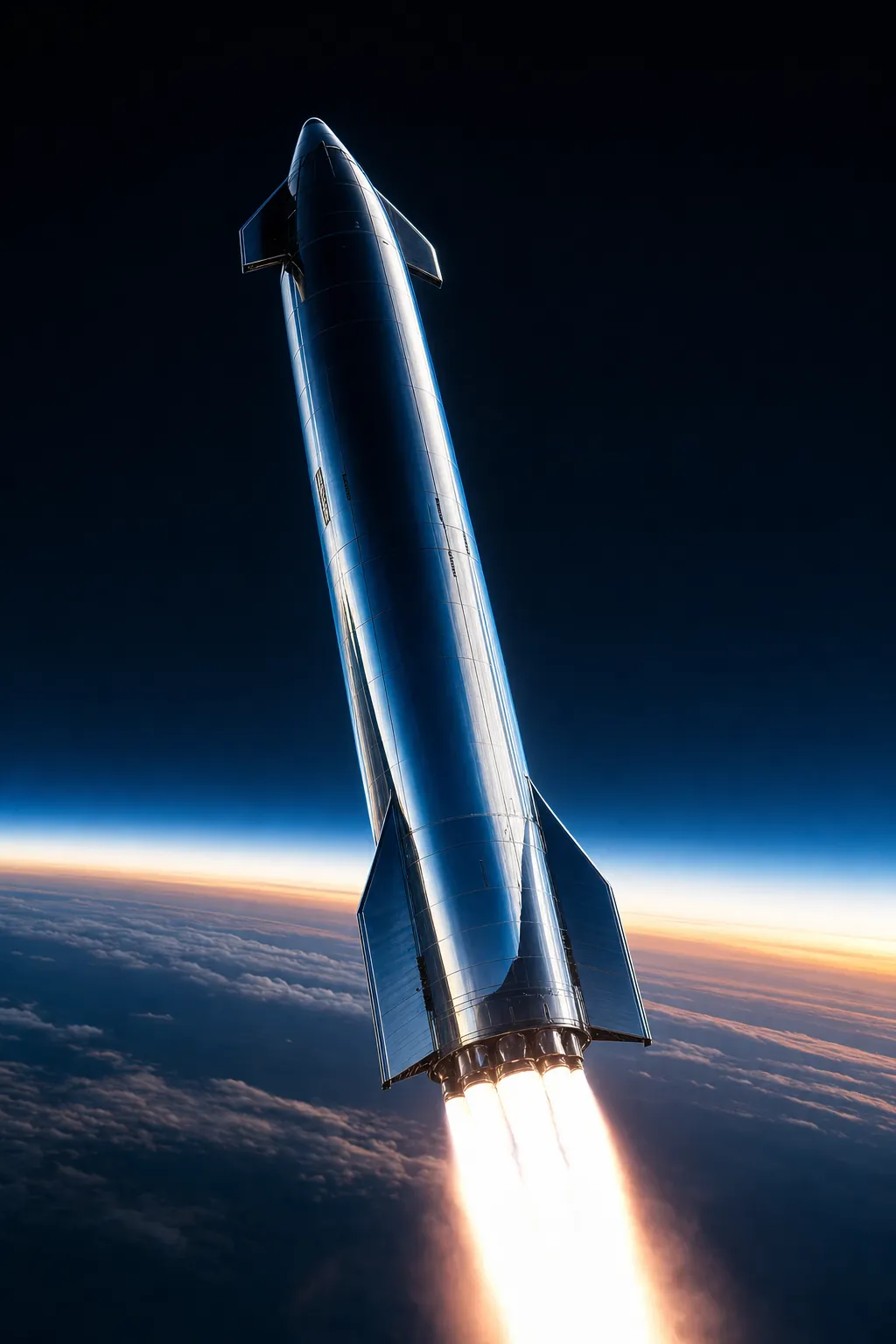
A polished stainless-steel super-heavy launch vehicle ascending through the upper atmosphere at dusk, engine plume below and Earth's curve on the horizon. Dispatch 01

Starship's Mars ambitions hit turbulence but push forward

SpaceX is still targeting a Mars mission in 2026 even after Flight 9 broke up over the Indian Ocean — because the 397-foot, fully reusable stack is the whole cost argument.

In a 42-minute presentation posted in late May 2025, Elon Musk said SpaceX is still targeting a Mars mission in 2026, framing progress by "the timeline to establishing a self-sustaining civilization on Mars."

Starship's ninth test flight, launched May 27, 2025, reached space but broke up over the Indian Ocean after a propellant leak, following two earlier mid-flight explosions on Flights 7 and 8 in January and March 2025.

The vehicle's fully reusable design — a 397-foot stack with a Super Heavy booster and an upper Ship stage — remains central to SpaceX's plan to drastically cut launch costs.
SourceSpace.com

Cost to deliver one kilogram to low Earth orbit — historical benchmarks and projections, per SpaceDaily.
VehicleCost per kg to LEO
Space Shuttle~$54,500
Space Shuttle (to the ISS specifically)~$93,400
Falcon 9 (advertised pricing)~$2,720
Starship — 100 t at ~$10M per flight~$100
Starship — SpaceX's 2019 ~$2M/launch projectionas low as $20

Falling cost-per-kilogram is the real story behind Starship

Reusability, not raw thrust, is what makes orbit affordable: the Space Shuttle cost roughly $54,500 per kilogram to low Earth orbit; a fully reusable Starship is projected near $100/kg.

Historical benchmarks show the Space Shuttle cost roughly $54,500 per kilogram to low Earth orbit (and about $93,400/kg to the ISS specifically), while Falcon 9's advertised pricing already cut that to around $2,720/kg.

Industry projections for a fully reusable Starship carrying 100 tonnes at roughly $10 million per flight put the cost near $100/kg — and SpaceX's own 2019 operating-cost projection of about $2 million per launch implies figures as low as $20/kg.

These numbers illustrate why reusability, not just raw thrust, is the key to affordable orbital access.

SourceSpaceDaily

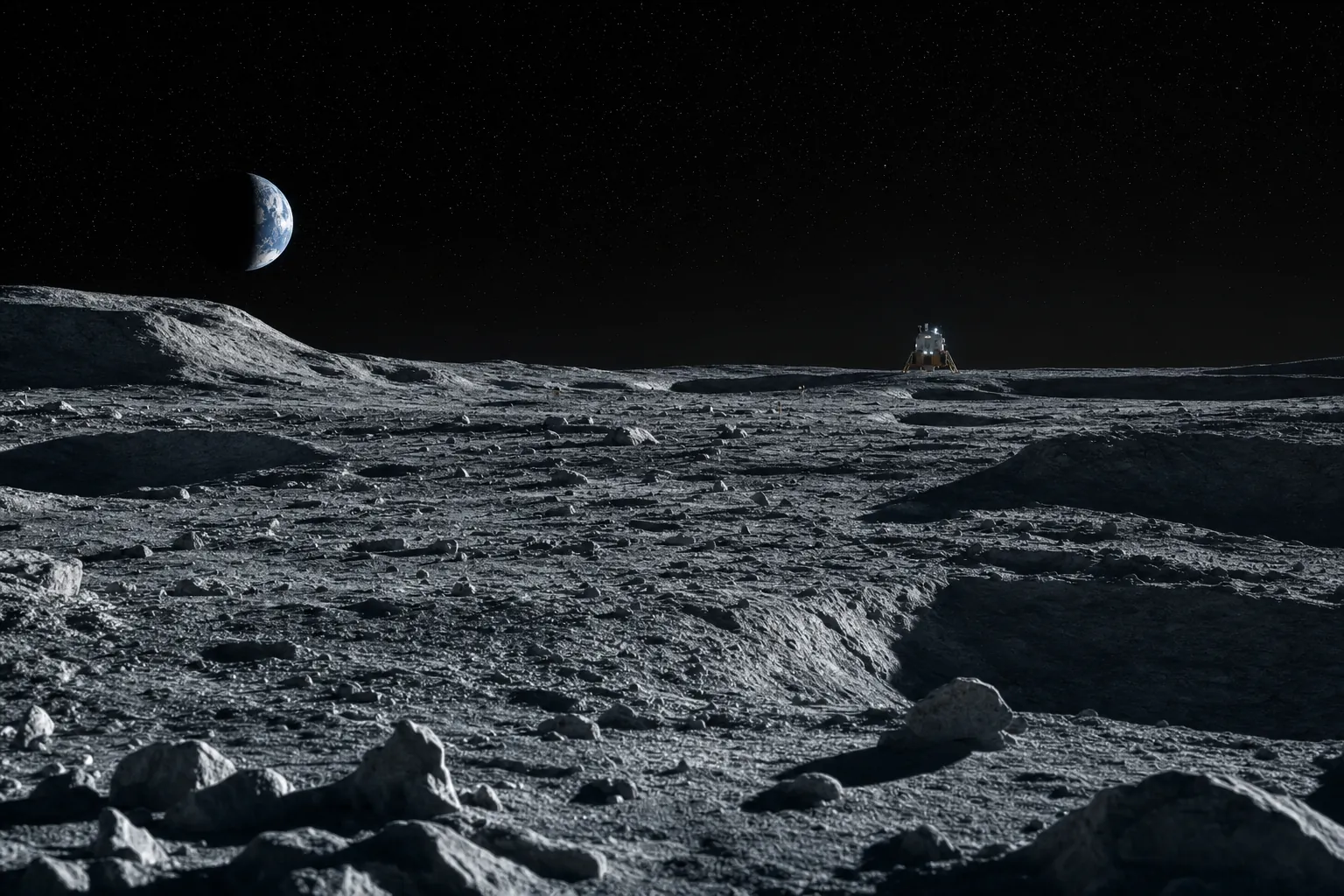
The lunar surface at a low sun angle with long shadows across grey regolith, a small distant crewed lander on the horizon and Earth as a blue crescent in the black sky. Dispatch 03

NASA restructures Artemis for a faster lunar cadence

NASA's updated Artemis architecture standardizes vehicle configuration and commits to at least one crewed lunar surface landing every year starting with Artemis IV in 2028.

NASA announced an updated Artemis architecture that standardizes vehicle configuration and commits to at least one crewed lunar surface landing every year starting with Artemis IV in 2028.

Artemis II is set to fly astronauts around the Moon with launch opportunities in April, and NASA added a new mission ahead of a 2027 Artemis III flight designed to test rendezvous and docking with commercial landers from SpaceX and Blue Origin in low Earth orbit before the crewed landing.

SourceNASA

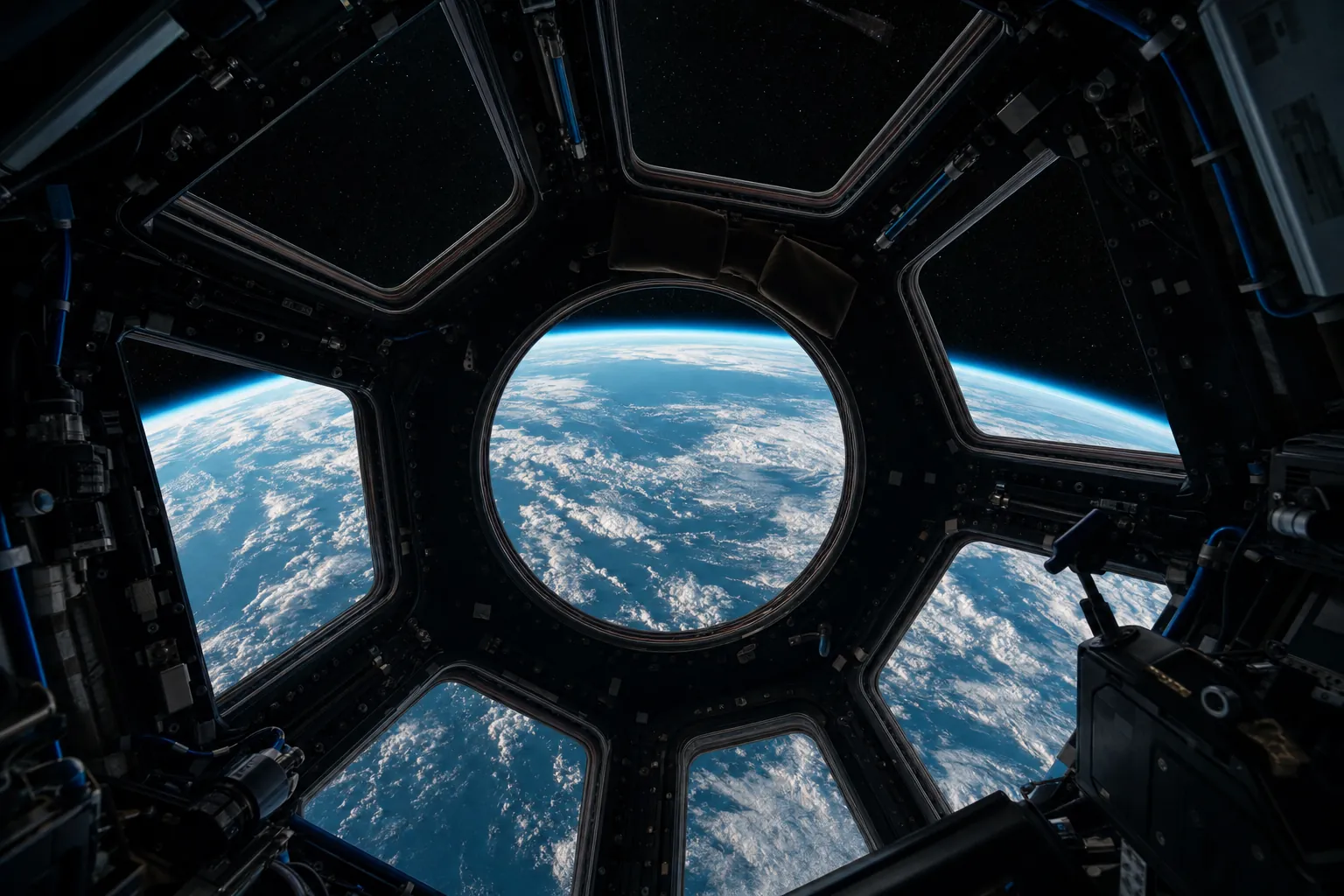
View through the multi-pane observation cupola of an orbiting spacecraft, Earth's blue curve and cyan atmospheric limb filling the windows. Dispatch 04

The ISS is on a clear countdown to retirement in 2030

Continuous human presence in low Earth orbit since November 2000 is about to reach 25 years — and the station that made it possible is scheduled to be deliberately deorbited in 2030.

NASA and its partners have maintained a continuous human presence in low Earth orbit since November 2000, a streak soon reaching 25 years, but the station — whose first modules launched in 1998 — is scheduled to be deliberately deorbited into a remote area of the Pacific Ocean in 2030.

Over its life the ISS has hosted more than 4,000 experiments and generated over 4,400 research publications, a legacy that commercial successor stations are now racing to continue.

SourceSpace.com

A modular commercial space station in low Earth orbit with cylindrical habitat modules, gold solar arrays and a large observation cupola, Earth below. Dispatch 05

Axiom Space closes out a "landmark year" building toward Axiom Station

Ax-4 flew the first-ever government astronauts from India, Poland, and Hungary on an 18-day mission running more than 60 experiments representing 31 nations.

In its 2025 Year in Review, Axiom Space said it "solidified [its] leadership in commercial human spaceflight," highlighted by Axiom Mission 4 (Ax-4) — its fourth private ISS mission, commanded by Peggy Whitson, carrying the first-ever government astronauts from India, Poland, and Hungary on an 18-day flight that ran more than 60 experiments representing 31 nations.

Axiom also revised its Axiom Station assembly sequence as it works toward becoming a free-flying commercial outpost.

SourceAxiom Space

Earth's curved horizon from low orbit at the terminator, a thin glowing cyan atmospheric limb against near-black space. Dispatch 06

Orbital Reef and Vast's Haven-1 advance in the commercial-station race

Orbital Reef cleared a NASA System Definition Review and moved into design, targeting operations around 2027, while Vast began hardware integration on Haven-1.

Blue Origin and Sierra Space's Orbital Reef — backed by Boeing, Amazon, Redwire, and Genesis Engineering — completed a NASA System Definition Review and moved into its design phase, with an operational target around 2027.

Meanwhile Vast began hardware integration on Haven-1, billed as a step toward the "world's first commercial space station" and a stepping stone to the multi-module Haven-2, intended as an affordable ISS successor for microgravity research and manufacturing.

SourcesBlue OriginVast Space

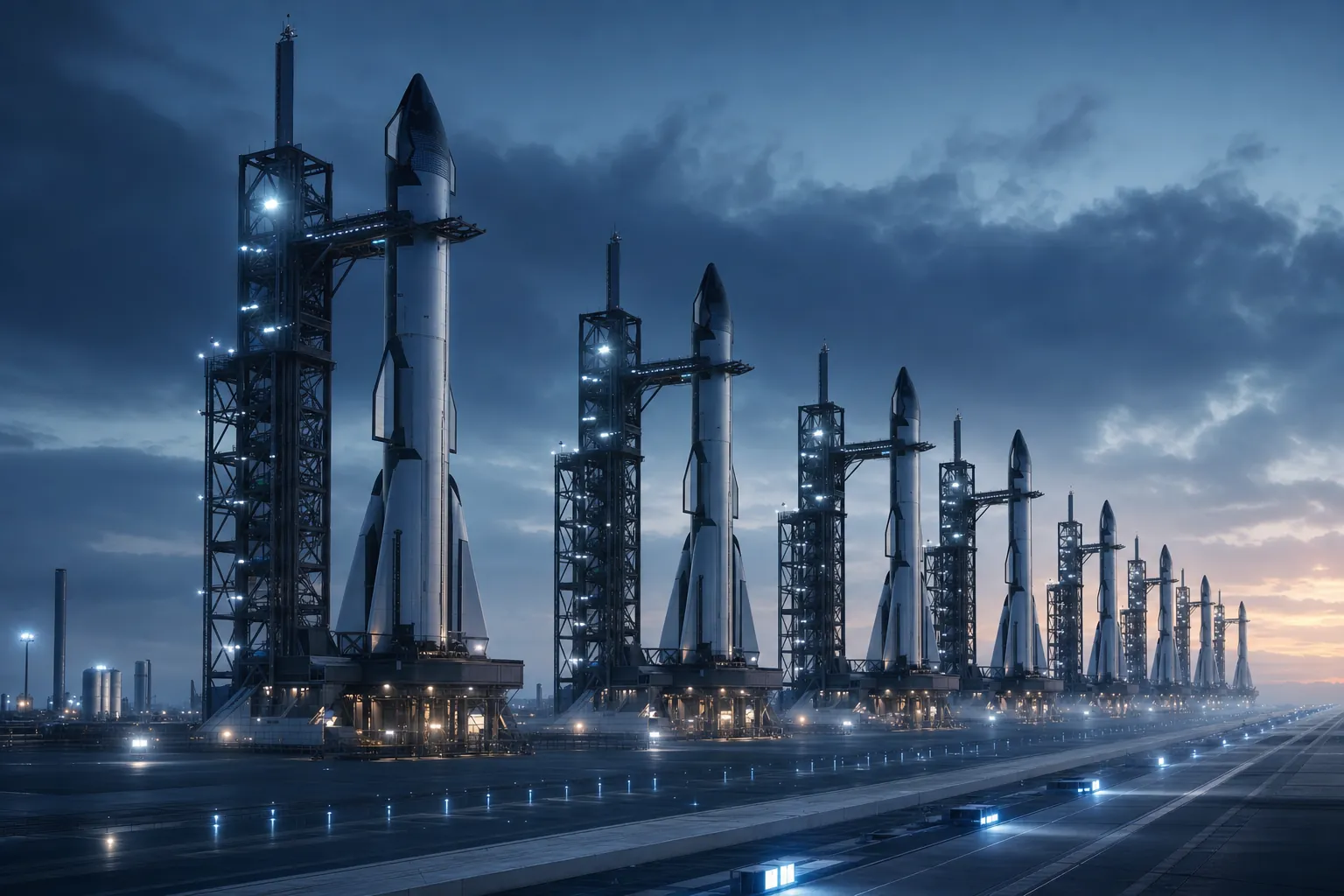
A row of identical tall reusable rockets standing on adjacent pads at a spaceport at blue-hour dawn, service gantries and runway lights receding into the distance. Dispatch 07

Voyager's Starlab bets on a "launch whole" design philosophy

Rather than assembling modules incrementally like the ISS, Starlab is designed to launch as a single unified platform so it can begin full research operations from day one.

Rather than assembling modules incrementally like the ISS, Voyager Technologies' Starlab — built on the heritage of more than 1,400 missions and 12 active ISS research facilities, including the Bishop Airlock, the first commercial airlock on the space station — is designed to launch as a single unified platform so it can begin full research operations from day one.

SourceVoyager Technologies

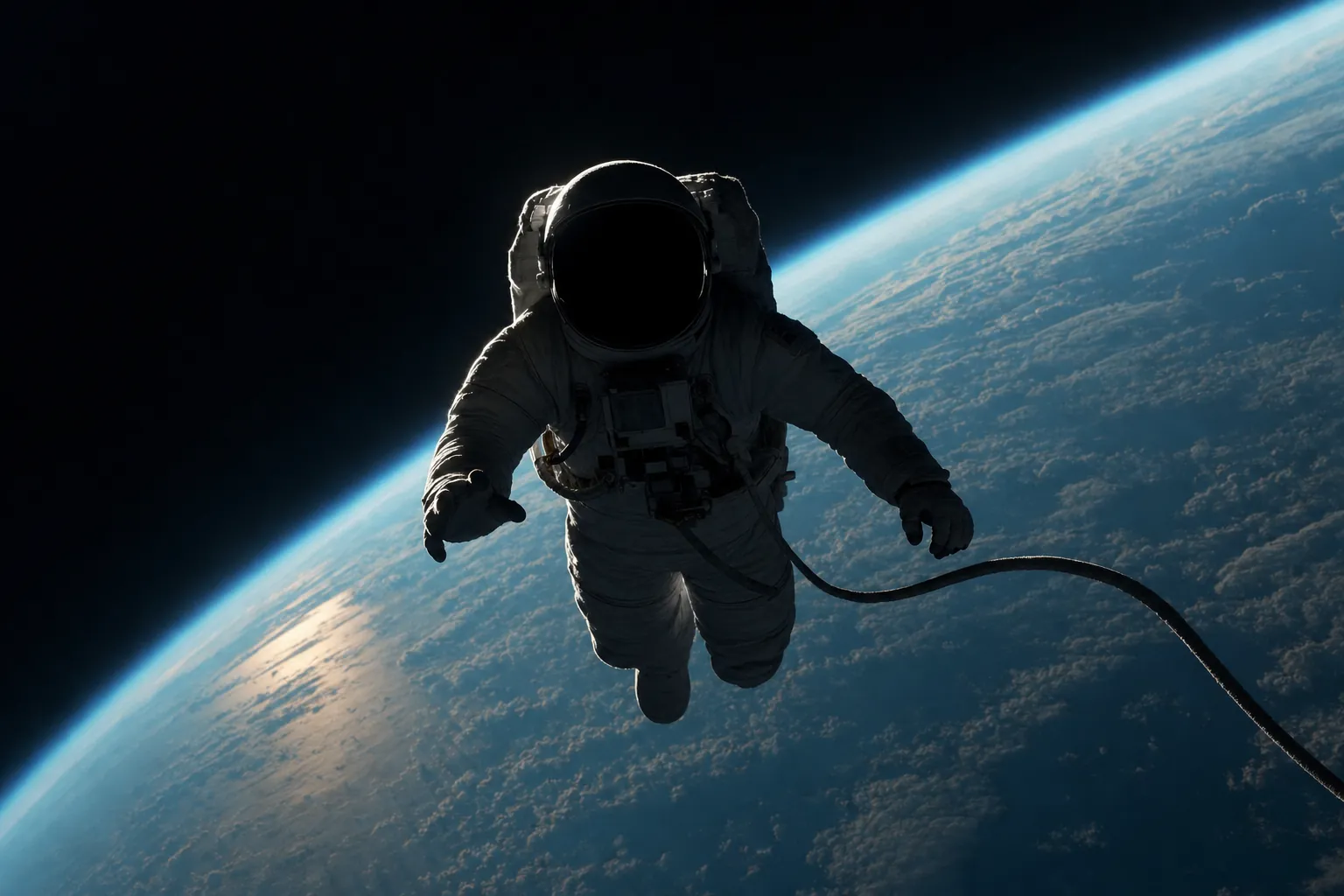
A lone spacewalking figure in silhouette against Earth's cyan atmospheric limb, tether line curving away into black space; the visor is dark and unreadable. Dispatch 08

Private astronauts are becoming a routine feature of orbital life

Polaris Dawn flew four people for nearly five days and 75 orbits, including the first-ever commercial spacewalk — and Chris Hadfield now calls it possible to buy a ticket to space for the price of a luxury car.

SpaceX's Polaris Dawn mission, the first of Jared Isaacman's three-flight Polaris Program launched in partnership with St. Jude Children's Research Hospital, flew a four-person crew for nearly five days and 75 orbits aboard Crew Dragon Resilience in September 2024, including the first-ever commercial spacewalk.

Commander Chris Hadfield has since called the era "a revolutionary time" in which "it's possible to just buy a ticket and go to space for the price of a luxury car."

SourcesWikipediaTED Talks Daily transcript

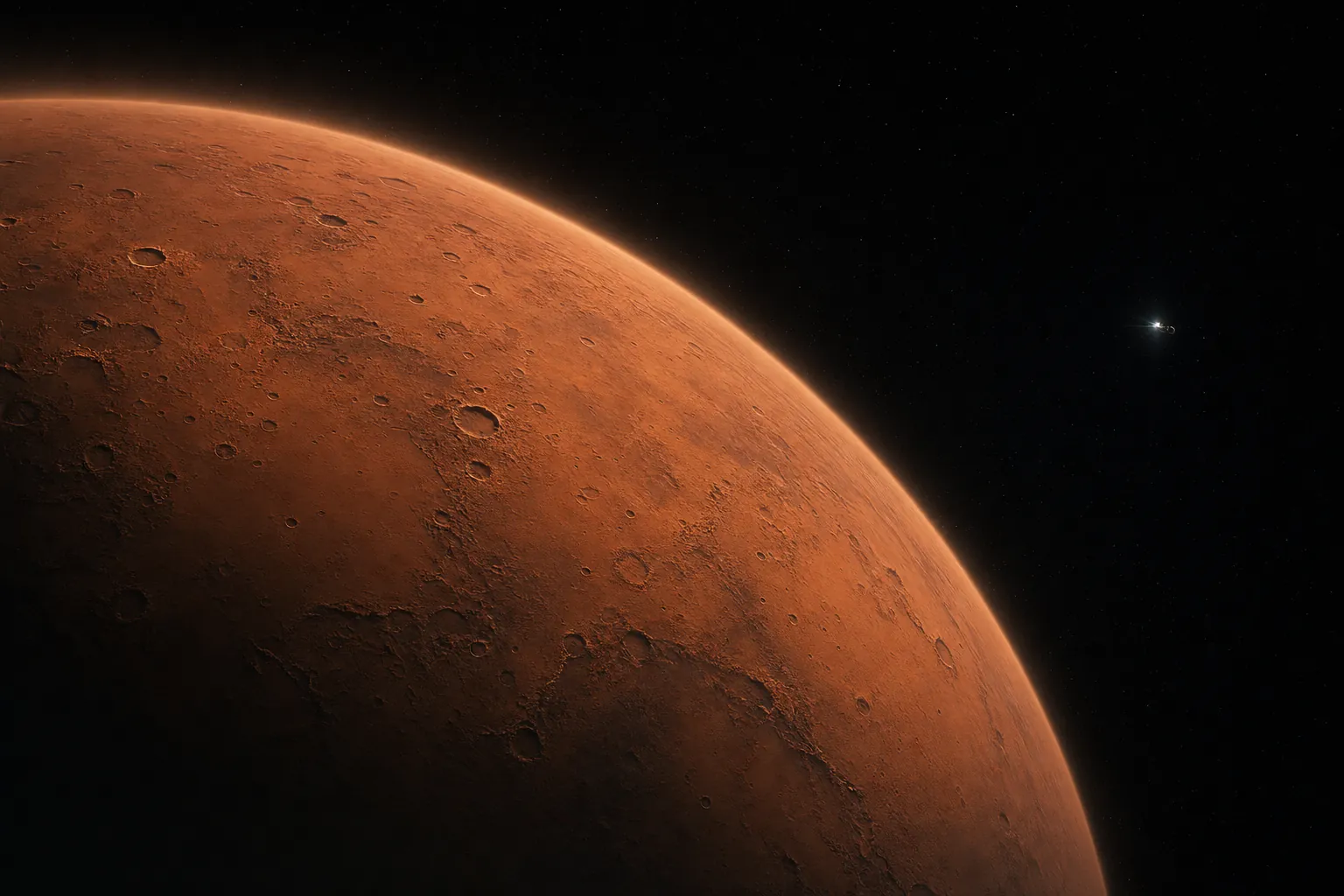
Mars seen from orbit, its rust-red cratered surface and thin dusty atmospheric limb against black space, with a distant spacecraft glinting as a point of light. Dispatch 09

Mars Sample Return collapses in Congress, but the door isn't fully shut

A compromise spending bill in early 2026 ended Mars Sample Return, but $110 million was redirected into a new "Mars Future Missions" line to keep the technology alive.

A compromise congressional spending bill in early 2026 effectively ended NASA's Mars Sample Return program, stating "the agreement does not support the existing Mars Sample Return program," leaving dozens of carefully cached Perseverance rock cores in limbo.

Congress did redirect $110 million into a new "Mars Future Missions" line to keep developing key technologies, which the Planetary Society's Jack Kiraly said could let NASA "hit the reset button" on sample return later.

SourceScience.org

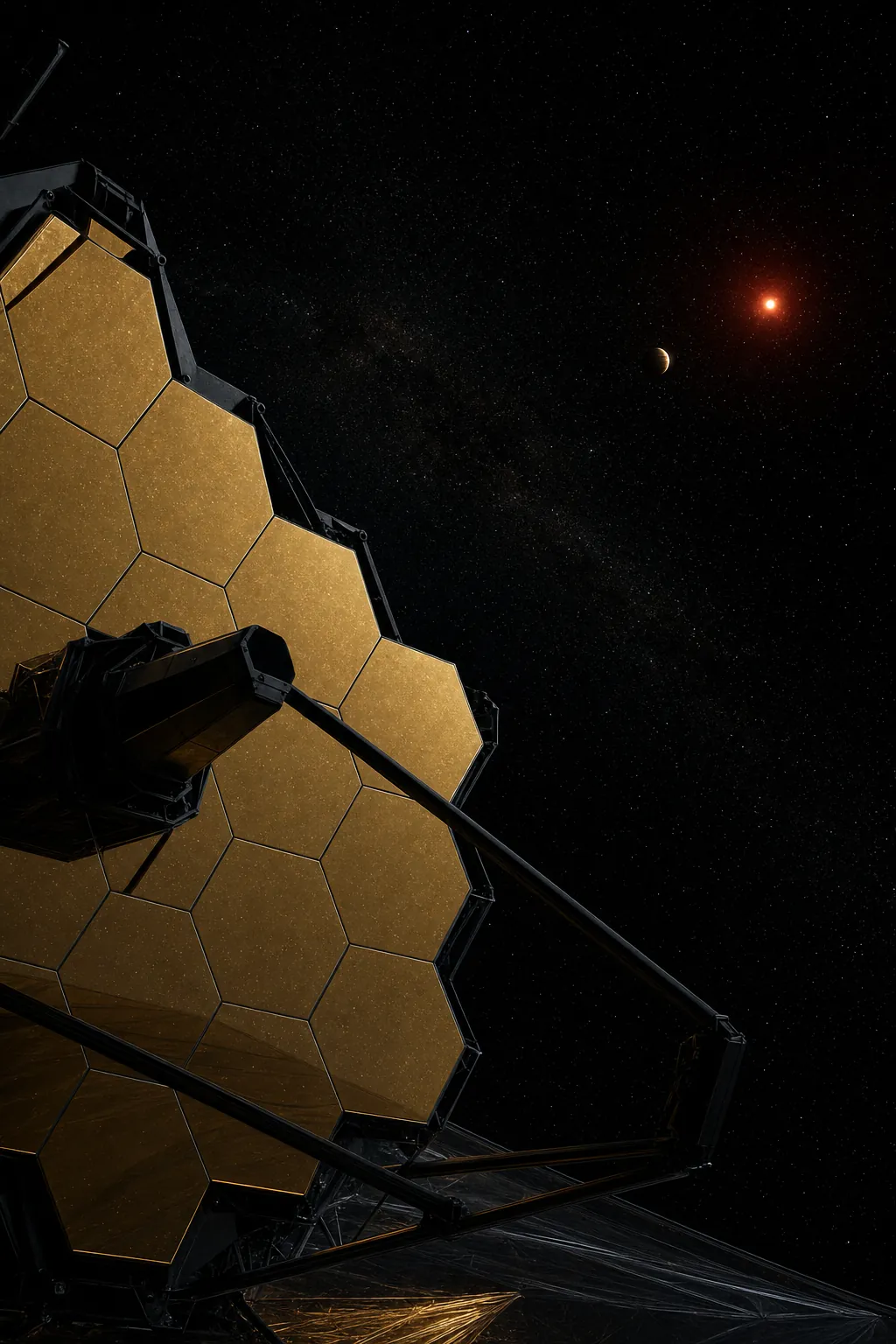
Gold hexagonal mirror segments of a deep-space telescope in the foreground, with a faint distant gas giant beside a small red dwarf star in black space. Dispatch 10

JWST keeps redefining what's possible in exoplanet science, while tourism prices inch down

Webb directly imaged the least massive exoplanet ever seen — and Virgin Galactic resumed suborbital ticket sales at $750,000 a seat, a reminder that real affordability will come from reusable orbital vehicles.

Researchers announced that the James Webb Space Telescope captured a direct image of a young, Saturn-sized gas giant orbiting a small star roughly 110 light-years away in the constellation Antlia — the least massive exoplanet ever directly imaged, using a French-engineered coronagraph on Webb's Mid-Infrared Instrument; fewer than 2% of the nearly 5,000 exoplanets found since the 1990s have been captured through direct imaging.

Meanwhile, Virgin Galactic resumed suborbital ticket sales in March 2026 at $750,000 per seat after a two-year hiatus — a reminder that true affordability will come from reusable orbital vehicles, not suborbital tourism alone.

SourcesReutersBloomberg

Every dispatch above links to the agency, operator or publication that reported it. Nothing here is paraphrased from memory.

Next: what's actually false →